_edited.png)

Biodiesel
What is it?
Biodiesel can be blended and used in many different concentrations. The most common are B5 (up to 5% biodiesel) and B20 (6% to 20% biodiesel). Generally, B20 and lower-level blends can be used in current engines without modifications. In fact, many diesel engine original equipment manufacturers (OEMs) approve the use of B20 for light-duty diesel vehicles.

Biodiesel is a domestically produced, renewable fuel that can be manufactured from vegetable oils, animal fats, or recycled restaurant grease for use in diesel vehicles or any equipment that operates on diesel fuel.
B100 (pure biodiesel) is most commonly used as a blend stock to produce lower biodiesel blends and is rarely used as a transportation fuel on its own. Compared with B20 and lower blends, B100 and other high-level blends are less widely used because they often require special handling, may require equipment modifications, and are generally less cost-effective due to limited regulatory incentives.
What are the Benefits?
Reduction of petroleum consumption: use of any blend of biodiesel will reduce overall use of petroleum and replace it with renewable-based fuel produced in the U.S.
Pollutant Reduction: Biodiesel can substantially reduce tailpipe emissions, including unburnt hydrocarbons, carbon monoxide, and particulate matter. Nitrogen oxide emissions can also be reduced to near-zero levels when biodiesel is used in combination with emission control reduction technology.
Improved engine operation: Biodiesel increases fluid lubricity, which is needed in diesel engines to keep moving parts from wearing prematurely. Biodiesel can increase lubricity to diesel fuels at blend levels as low as 1%.
A safer fueling option: Biodiesel is nontoxic, meaning it will cause far less environmental damage if it is spilled or released. Biodiesel also has a higher flashpoint (130°C) than regular diesel (52°C).

Biodiesel in Maine
Maine Standard Biofuels
Based in Portland, Maine Standard Biofuels is Maine's only biodiesel manufacturer, producing renewable biodiesel from recycled used cooking oil collected from more than 1,000 restaurants and food manufacturers across New England. Founded in 2006, the company diverts waste grease from the waste stream and transforms it into biodiesel for transportation, Bioheat fuel, biodegradable cleaning products, renewable energy, and compost through a near-zero-waste production process.

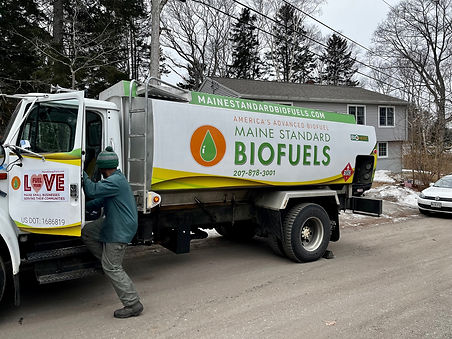
Maine Standard Biofuels supplies biodiesel for on-road vehicles, marine applications, and heating while supporting a circular economy that keeps locally generated waste and energy resources within New England. Its biodiesel meets ASTM quality standards and is available at the company's Portland fueling station or through bulk delivery, providing fleets and businesses with a renewable alternative to conventional diesel. The company also operates its own collection fleet on biodiesel and powers its Portland biorefinery with sustainable energy.
Maine Department Of Transportation
The Maine Department of Transportation (MaineDOT) has expanded its use biofuel by integrating it into their heavy-duty fleet. In partnership with Maine Standard Biofuels, MaineDOT now supplies biodiesel at 15 fueling stations from Scarborough to Bangor and uses B20 Bioheat (20% biodiesel, 80% petroleum heating oil) in 22 heating oil tanks at facilities across southern Maine.

In 2024, 237 heavy-duty trucks and pieces of construction equipment operated on biodiesel, an increase from 170 vehicles in 2023, consuming more than 209,000 gallons of biodiesel. MaineDOT also distributed over 18,500 gallons of biodiesel to other state agencies and municipalities for use in their medium- and heavy-duty fleets. Beyond fuel switching, the department has strengthened its emissions reduction efforts by replacing 53 heavy-duty trucks with certified clean-idle models and installing telematics in 560 heavy-duty trucks to monitor and reduce unnecessary idling, further lowering fuel consumption and emissions.
Resources
Biodiesel Station Locator
.png)
