_edited.png)

Hydrogen
What is it?
Hydrogen is an alternative transportation fuel that has the potential to support a cleaner, more diverse energy future. It can be produced from a variety of domestic resources, including natural gas, biomass, and renewable electricity, making it a flexible option for reducing dependence on petroleum. While hydrogen is not yet widely used as a transportation fuel, it is expected to play an important role in decarbonizing sectors where battery-electric vehicles may be more challenging to deploy, such as long-haul freight and certain heavy-duty applications.

Today, most hydrogen produced in the United States is made through steam methane reforming, a process that uses high-temperature steam to extract hydrogen from natural gas. Hydrogen can also be produced through electrolysis, which uses electricity to split water into hydrogen and oxygen. Although electrolysis requires more energy, it can be powered by renewable resources such as wind or solar energy, producing low- or zero-carbon hydrogen without the emissions associated with natural gas reforming.
Hydrogen is most commonly used in fuel cell electric vehicles (FCEVs), which generate electricity onboard by combining hydrogen with oxygen, emitting only water vapor from the tailpipe. Fuel cell vehicles can be refueled in just a few minutes and are typically two to three times more efficient than gasoline-powered internal combustion engines. To provide a driving range comparable to conventional vehicles, hydrogen is stored onboard as a compressed gas in high-pressure tanks. While hydrogen can also be used in modified internal combustion engines, fuel cells offer greater efficiency and eliminate tailpipe emissions, making them the primary focus of hydrogen transportation technologies.
What are the Benefits?
Hydrogen as a fuel produces little to no emissions. When used in a fuel cell electric vehicle (FCEV), hydrogen combines with oxygen to generate electricity, producing only water vapor as the tailpipe emission. If the hydrogen is produced from renewable sources through electrolysis, the fuel can have very low or even zero lifecycle greenhouse gas emissions.
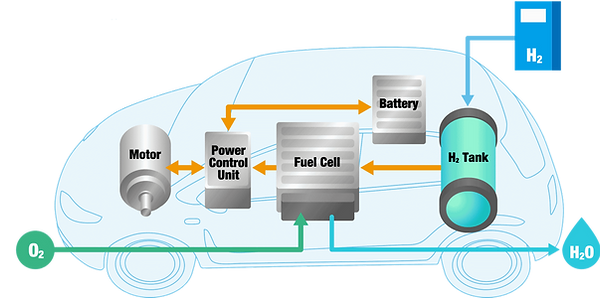
Hydrogen vehicles are highly efficient, offer fast refueling times, and can achieve driving ranges comparable to conventional gasoline and diesel vehicles. Fuel cell electric vehicles can typically be refueled in just 3–5 minutes, making them well suited for applications where minimizing downtime is important, such as long-distance travel and heavy-duty transportation. They are also two to three times more efficient than conventional gasoline-powered internal combustion engine vehicles, allowing them to travel farther using less energy while improving overall energy efficiency.
However, the implementation of hydrogen as a transportation fuel is still in the early stages, and not without its challenges. Storage, cost, and infrastructure are the primary areas limiting the use of hydrogen today.
Due to hydrogen's low energy density by volume, it must be stored in high-pressure tanks, which require additional space and specialized equipment. Additionally, fuel cell vehicles and hydrogen fueling stations remain more expensive than conventional vehicles and fueling infrastructure, though costs are expected to decline as the technology matures and the number of fueling stations increase.
